

Budget-Friendly OOH Advertising in Australia: A Playbook for Growing Brands
Out-of-home advertising isn’t just for national brands with six-figure budgets. Here’s how growing brands across Australia are using street furniture, fuel stations and programmatic screens to get seen for a fraction of the cost.
Ask a small business owner in Australia what OOH advertising costs, and most will guess a number with far too many zeros. They picture a billboard on the Sydney Harbour Bridge approach, a six-figure retainer, an agency reserved for Woolworths and Qantas budgets. That assumption is quietly costing them a fast-growing channel.
Australia’s OOH advertising industry closed 2025 with net media revenue of $1,449.5 million, up 11.43 percent on the year before, according to the Outdoor Media Association. Growth is coming from formats built for smaller budgets, not enterprise ones: bus shelters, community noticeboards, fuel stations, and digital billboards in Australia’s regional and suburban corridors.
This is a guide to that version of OOH: real Australian pricing on bus shelters, fuel stations and digital billboards, the formats worth testing first, and the mistakes that quietly waste a small budget.
Key Takeaways
- A useful OOH test starts at a few hundred dollars, not six figures.
- Proximity beats prestige: closer, smaller media outperforms distant, larger media for local goals.
- Programmatic DOOH gives a growing brand pause, retarget and measure controls that static sites can’t.
- Every placement needs a trackable action, or the next campaign is impossible to justify.
Why OOH Deserves a Line in a Growing Brand’s Budget
Before getting into tactics, it’s worth understanding why this channel is worth the effort at all, especially when a growing brand’s marketing dollars are already stretched across paid social, search, and whatever’s left for everything else.
Reach is the first reason. OOH now reaches around 97 percent of Australians each week, roughly 22 million people aged 14 and over, based on OMA data. Eight in ten Australians leave home every day, generating an estimated 95 million trips across the country, and every one of those trips is a chance to pass a piece of public media. That kind of reach is difficult to buy anywhere else at a comparable price, particularly as attention on paid social keeps fragmenting and getting more expensive.
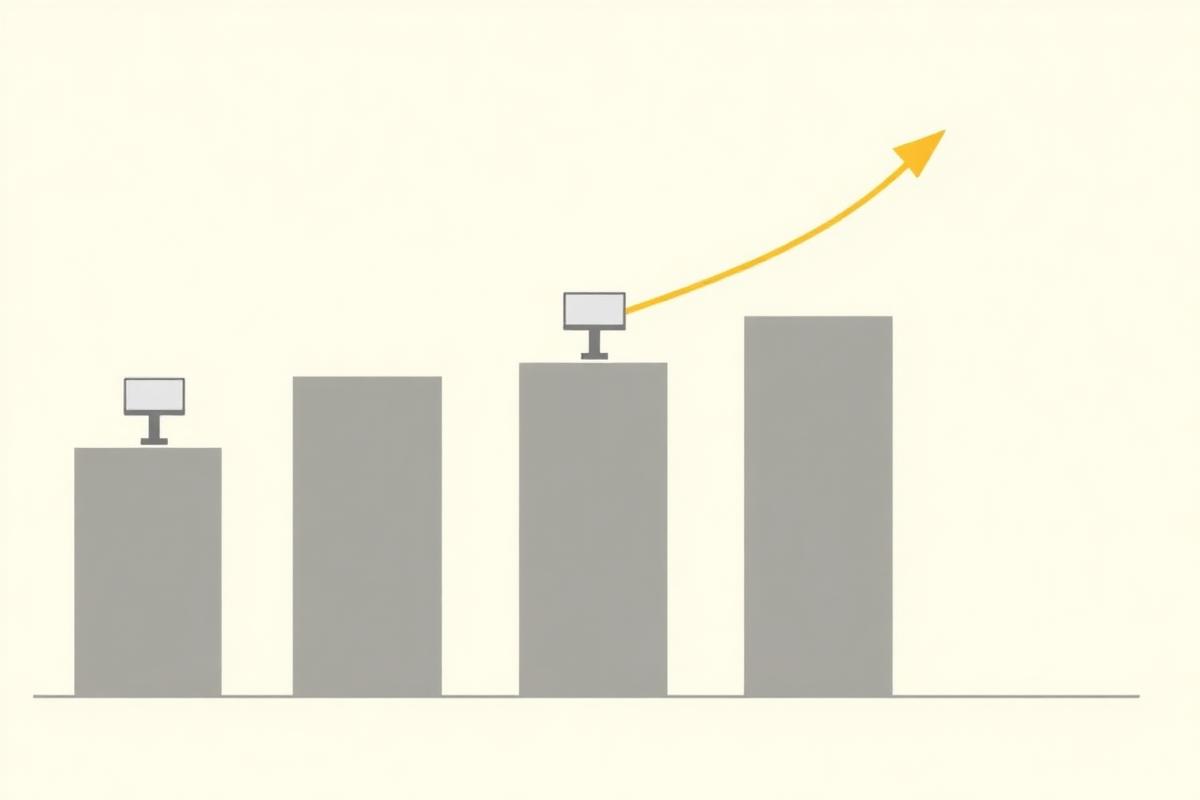
Digital is also doing most of the heavy lifting inside the category now, which matters because digital formats are the ones that can be booked in smaller, more flexible chunks. Digital out-of-home accounted for 76.6 percent of total OOH revenue in 2025, up from 74.9 percent the year before. That shift toward screens, rather than static print, is exactly what has opened the door to shorter flights, smaller budgets and the kind of geo-targeting that used to be reserved for online advertising.
Eye-tracking research from the Arbitron Outdoor Study found that digital billboards produced 63 percent longer gaze time and 47 percent more visual fixations than static panels, and neuroscience research published in Vision Research helps explain why: motion activates the brain’s superior colliculus, the region responsible for reflexively orienting gaze toward a moving stimulus, so a screen catches the eye before a viewer consciously decides to look at it.
There’s also a generational argument that tends to surprise marketers. A 2025 YouthInsight study found that 81 percent of Australians aged 14 to 29 say they dislike advertising in general, but the research draws an important distinction: young people are rejecting ads that feel intrusive, repetitive or disconnected from their world, not advertising itself. Out-of-home, done well, sits outside that fatigue because it can’t be skipped, blocked or muted, and it shows up in physical spaces people already trust. Separate YouGov research found 54 percent of Gen Z have looked up a product on their phone after seeing it on an out-of-home ad, and 48 percent have recommended a product they first saw on a poster or billboard.
The Numbers at a Glance
What “Budget” Actually Means in OOH
The mistake most growing brands make isn’t choosing OOH, it’s choosing the wrong entry point into OOH. They ask an agency for a quote on a premium billboard site, get a number that makes their eyes water, and conclude the whole channel is out of reach.
A smarter starting point is to think in terms of proximity rather than prestige. A bus shelter fifty metres from your shopfront, a noticeboard in the community centre your customers actually visit, a digital screen inside the shopping centre where your target customer does their weekly grocery run: all of these do more for a growing brand than a distant, high-traffic site chosen mainly for its size. Smaller, closer, more targeted media tends to outperform bigger, more expensive media when the goal is local awareness and foot traffic rather than national brand building.
Low-Budget OOH Formats at a Glance
A quick reference for where the budget can go and what it typically buys. Costs are indicative and will vary by location, media owner and season.
| Format | Typical Cost (AUD) | Commitment | Best For | Impact-to-Spend |
|---|---|---|---|---|
| Community noticeboard or council banner | Often free to around $250 | Event-tied or monthly | Hyperlocal trust-building, community goodwill | Very High |
| Wildposting / guerrilla (with permission) | $0 to $500 (design and printing only) | Ongoing, rotate as needed | Brand personality, local buzz, cafe and laneway culture | High |
| Fuel and service station digital screens | $1,000 to $2,500 per site (4-week campaign) | Single-site or multi-site, flexible | Automotive, food and beverage, local retail near the forecourt | High |
| Static bus shelter (local) | From around $2,500 | 2 to 4 week minimum flight | Store-radius awareness, new location launches | High |
| Digital bus shelter (busy metro) | $4,000 to $15,000 | 2 to 4 week minimum flight | Higher-traffic local push, brand launches | Medium to High |
| Digital billboard (regional or suburban) | $500 to $8,000 per 4-week campaign | 4-week typical, single-site bookings available | Local domination, launches, event bursts | Medium to High |
| Shopping centre or retail display screens | $500 to $10,000+ per week, format dependent | 2 to 4 week minimum booking | High-footfall purchase-decision moments, FMCG, seasonal offers | High |
| Self-serve programmatic DOOH (test budget) | $2,500 to $7,500 | Flexible: by play, day-part or short flight | Geo-targeted promotions, time-limited offers | Very High |
Street Furniture and Bus Shelters
Bus shelters and street furniture remain one of the most reliable entry points into OOH for a growing brand, mostly because pricing has stayed genuinely local. Static bus shelter advertising in Australia typically starts from around $2,500 for a local placement, while digital bus shelter campaigns in busier metro zones can run from roughly $4,000 to $15,000 depending on location and length, based on pricing published by Australian street furniture operators.
Fuel and Service Station Advertising
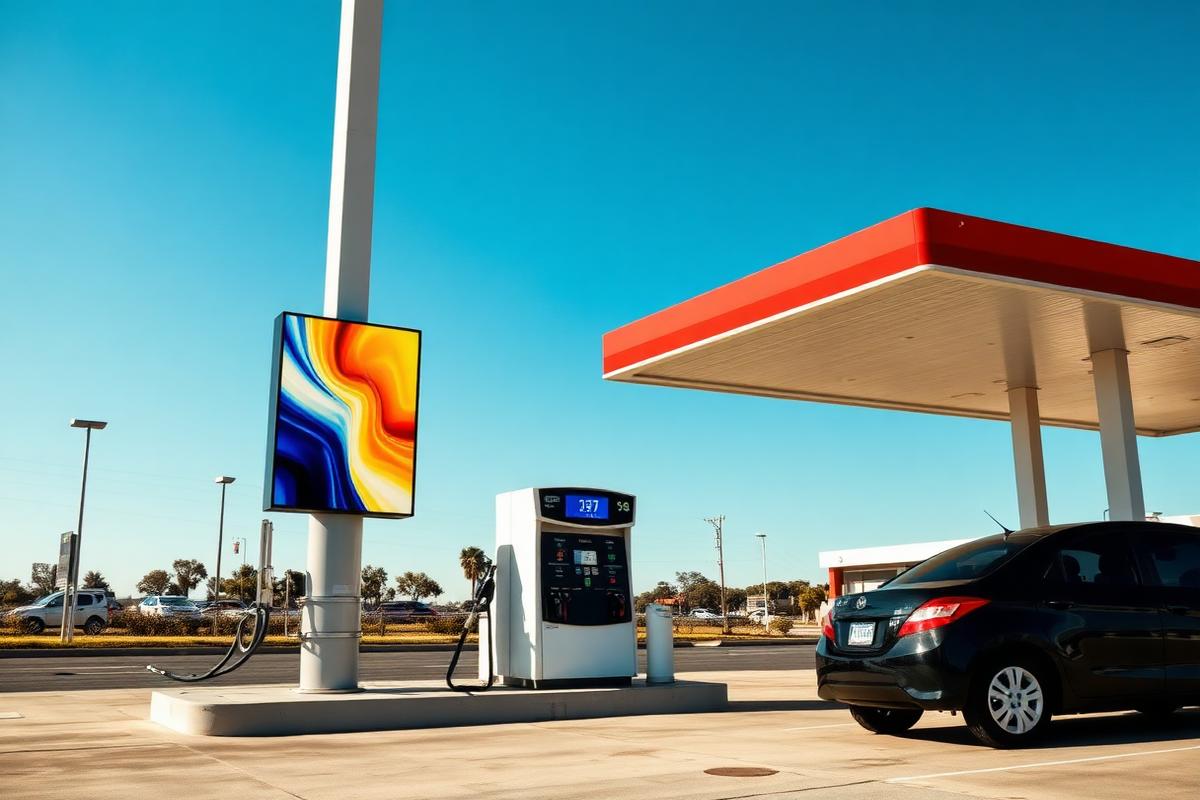
Fuel and service stations are one of the more overlooked environments in a growing brand’s OOH toolkit, mostly because the format gets filed under “big brand” categories like fuel companies and insurers. In reality, it’s built around a genuinely captive moment: a driver standing at the pump with nothing to do for several minutes but look around. Prodigy Growth Labs, which plans fuel-station campaigns across Australia, breaks that visit into four stages, approach, refuel, convenience visit and departure, and matches a different creative job to each one: bold and instantly readable on approach, one clear offer held through the refuelling window, a close-range prompt at the convenience counter, and a simple call to action to carry away at departure.
The format suits brands that make sense in a five-minute window: automotive services, food and beverage, insurance and roadside support, telecommunications, and local retail offers close enough to drive to. It’s a weaker fit for anything that needs a lot of explaining, since the strongest attention window still only lasts as long as a tank takes to fill. Fuel stations sit alongside shopping centres, retail displays, digital billboards and supermarkets in Prodigy Growth Labs’ screen environments, worth comparing side by side when weighing up formats for a campaign.
Digital Billboards
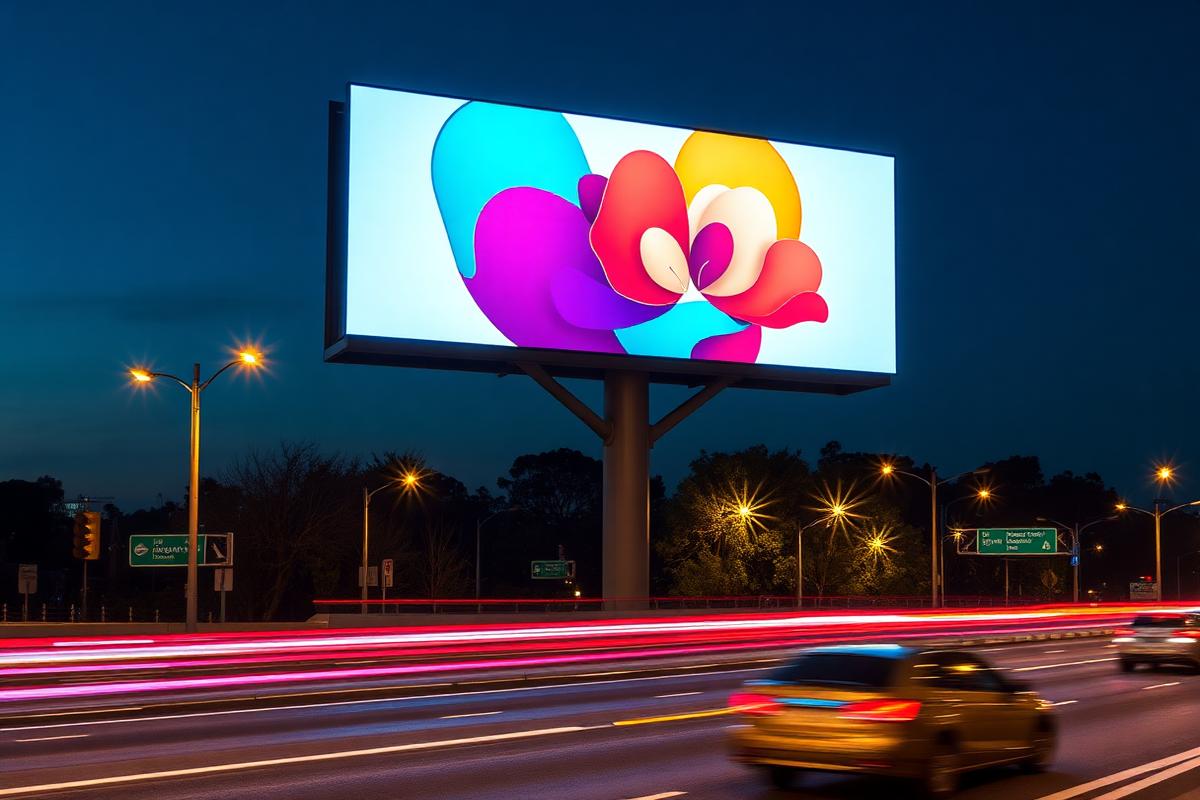
Digital billboards are the format most people picture when they hear “out-of-home,” and Prodigy Growth Labs frames the appeal simply: own the roadside, stay visible, build broad awareness across a route rather than a single street corner. The format works through rotation rather than exclusivity, most sites carry somewhere between six and ten advertisers cycling through six to fifteen second slots, and single-site bookings are available for a launch, an event or a tightly focused visibility goal rather than committing to a full network.
Cost is where billboards separate from the rest of this list. Premium CBD sites in Sydney, Melbourne and Brisbane run from around $8,000 to $25,000 or more per four-week campaign, but regional and suburban corridor sites are considerably more accessible, typically $500 to $3,000 for a regional placement and $3,000 to $8,000 in a mid-tier metro corridor, according to 2026 Australian pricing guides. For a growing brand with a defined local catchment, a suburban arterial site or a regional highway placement gets most of the reach benefit without the CBD premium.
Retail Display Advertising
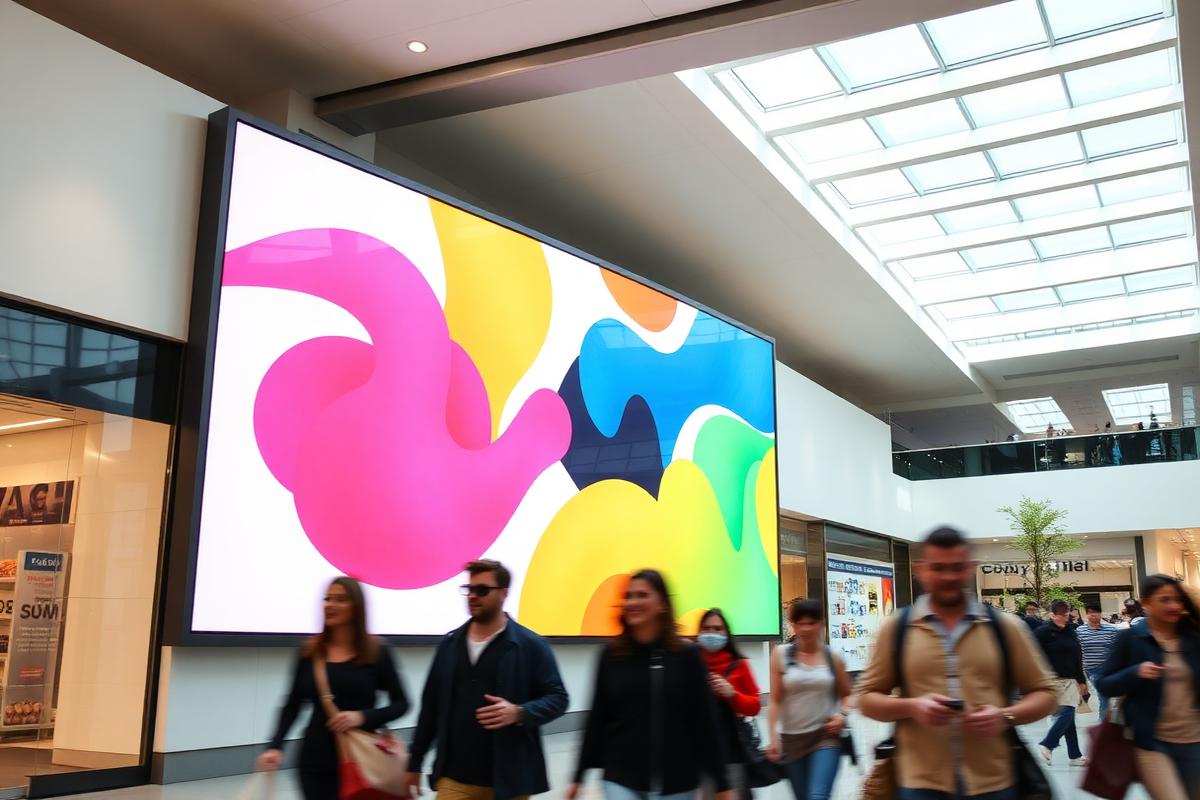
Retail displays put a brand inside the moment a purchase decision is actually being made, and the footfall behind that moment is larger than most growing brands assume. Scentre Group, which owns and operates Westfield across Australia and New Zealand, reported 160 million customer visits across its 42-centre portfolio in the year to April 2026, up 3.1 percent on the same period the year before, with full-year 2025 visits reaching 540 million. That is a genuinely large, captive audience walking past a screen inside a space where people are already shopping.
Shopping centre digital advertising in Australia typically runs from around $500 to $10,000 or more per week depending on the centre, screen type and location within it, with lower-cost static formats like floor decals and entrance panels available at the budget end. It suits FMCG, beauty, consumer electronics, retail finance and anything tied to a promotional burst or seasonal offer, and is a weaker fit when there’s no product or offer actually being sold nearby.
Community Noticeboards, Councils and Local Partnerships
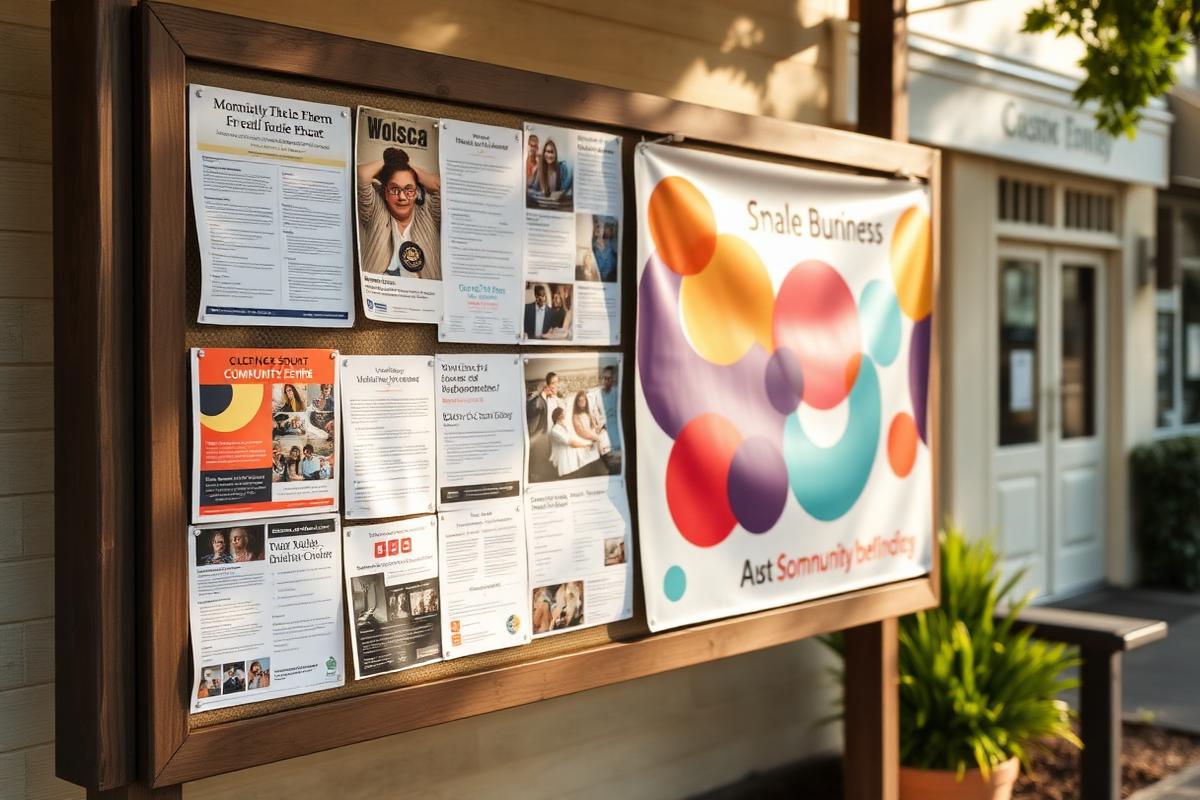
Not every OOH placement needs a media buyer. Local councils across Australia manage noticeboards, banner poles and community bulletin spaces in libraries, recreation centres, markets and town squares, often at a fraction of commercial OOH pricing, and sometimes for free if the message ties into a community event or local initiative. Farmers markets, school fetes and local sporting clubs also sell sponsorship space on banners and signage that reach a genuinely local, engaged audience.
These placements won’t move the needle on brand awareness across a city, but for a business whose entire customer base lives within a few suburbs, they’re some of the most cost-effective media available. A council banner outside a community hall during a local festival, timed to a promotion, can outperform a much more expensive placement that reaches people who will never walk into the store.
The other advantage is goodwill. Advertising through a community channel, rather than a commercial billboard, tends to read as support for the area rather than a sales pitch, which matters for a growing brand still building trust with a local audience.
Programmatic DOOH: Buying Screens the Way You Buy Social Ads
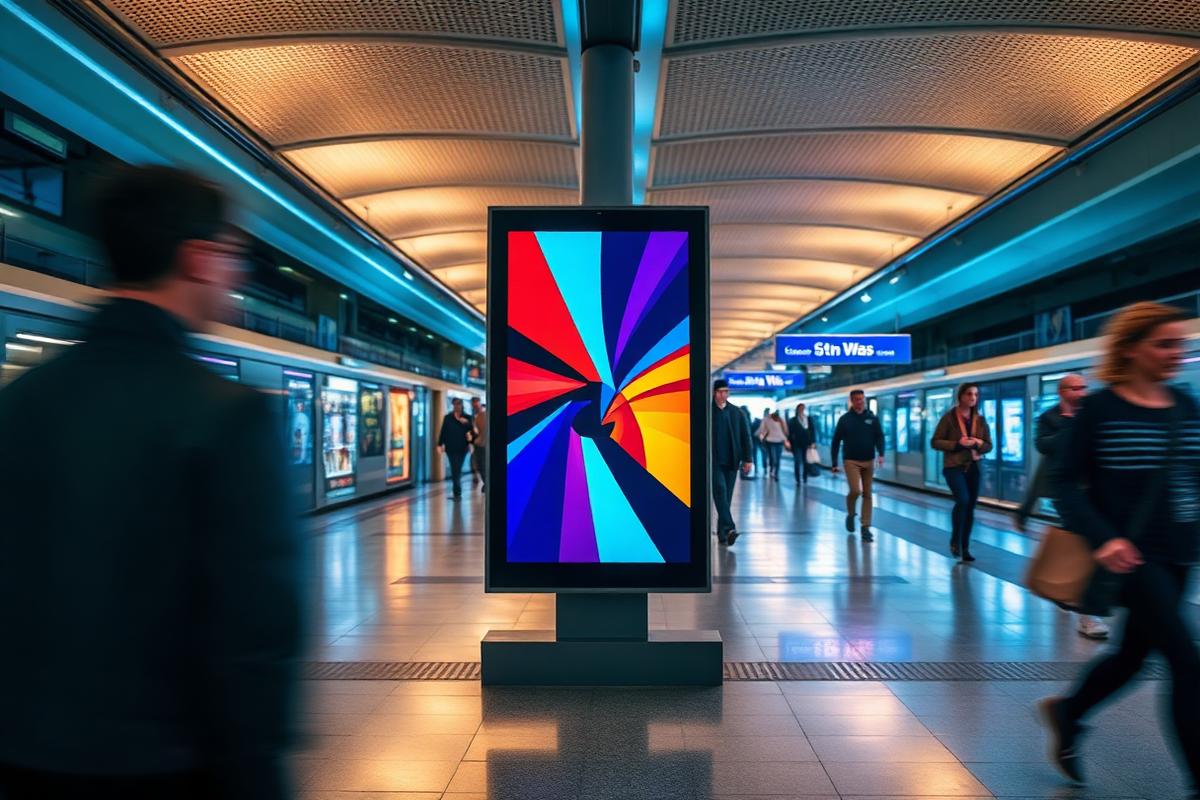
The biggest shift in OOH over the last few years has been the arrival of programmatic buying, which lets a brand book digital screens the same way it books a Meta or Google campaign: self-serve, with a card, against a defined budget and audience.
Platforms serving the Australian market, including CAASie, built by Brisbane agency Heurist specifically to give small and medium businesses a foothold in a market historically dominated by large agency buys, and marketplaces like AdQuick, which publishes self-serve test budgets from around $2,500 to $7,500 for a Sydney campaign, have chipped away at the four-week, five-figure minimums that used to define the category.
This flexibility is what makes programmatic DOOH genuinely useful for a growing brand, rather than just a scaled-down version of a big brand campaign. Screens can be geo-fenced to a radius around a store, scheduled to specific hours (lunch traffic near an office precinct, weekend traffic near a shopping strip), and switched off the moment a promotion ends.
The Mexican food chain Mad Mex, which runs on an annual advertising budget under half a million dollars, used dynamic programmatic DOOH to switch ads on near stores that needed a sales push and off near stores that were already performing well. The approach contributed to a 9 percent sales lift across its network of 70 restaurants, according to reporting in B&T. That kind of granular control simply wasn’t available to a business that size a decade ago.
Guerrilla and Wildposting in Everyday Spaces
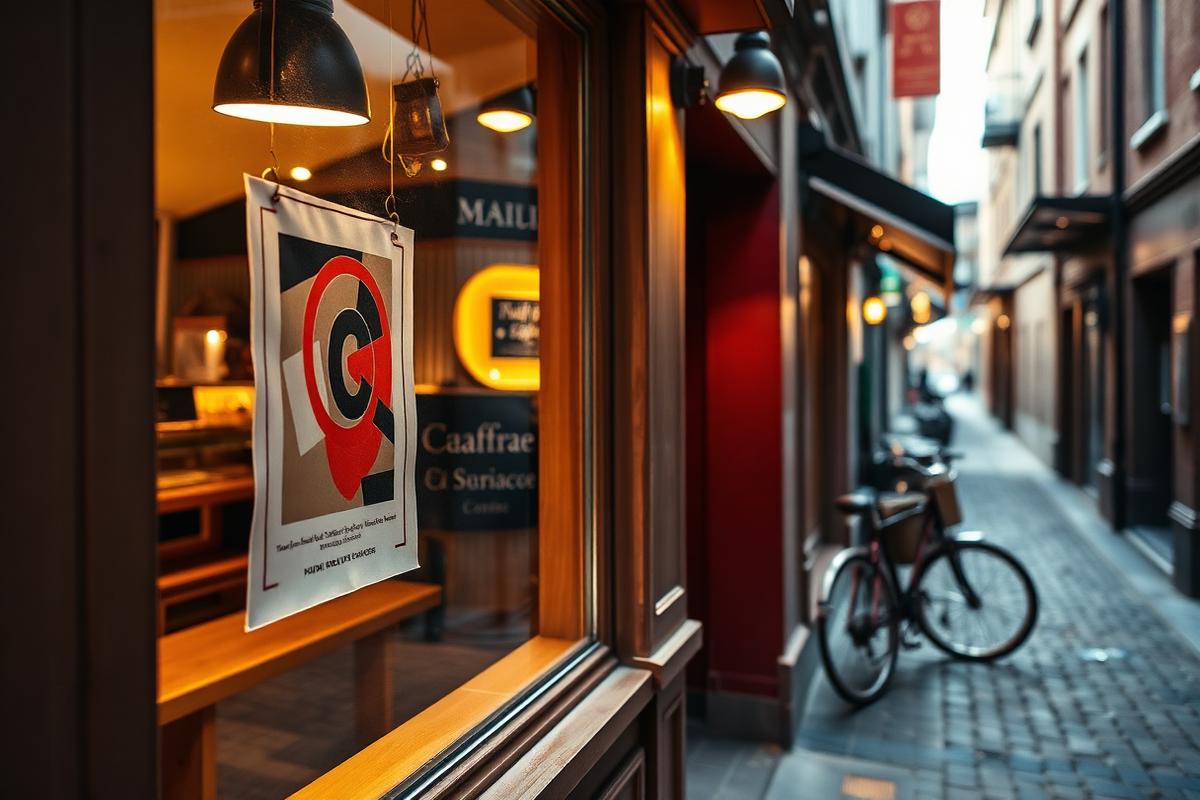
Not every impactful placement comes from a media owner’s rate card. Wildposting inside cafes, share houses, university precincts, laneways and co-working spaces, with permission, is one of the oldest tricks in the OOH book, and it still works because it’s unexpected in a way a formally booked panel isn’t.
A poster in the window of a complementary local business, a sticker pack left at a barber shop counter, a chalkboard sandwich sign outside a train station during commute hours: none of these require a media contract. They require a relationship with another local business and a design that’s strong enough to survive being seen for two or three seconds.
QR Codes and Trackable Calls to Action
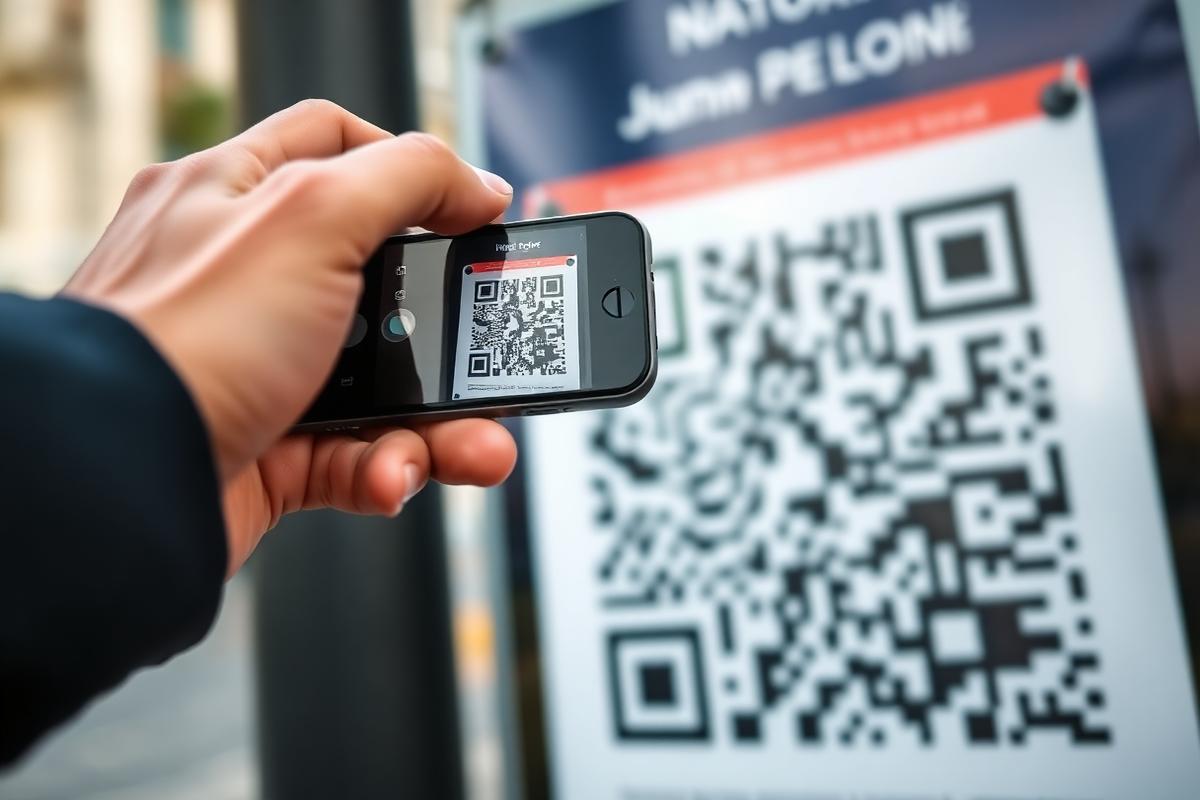
For a channel that’s traditionally been hard to measure, OOH has become far more accountable, and QR codes are the main reason. A dynamic QR code placed on a poster, bus shelter or digital screen turns a passive glance into a trackable action: every scan can be tied to a specific location, time of day and, with a unique landing page or UTM parameter, a specific creative version.
The execution matters more than the technology. A QR code buried in a corner, printed too small, or competing with three other calls to action simply won’t get scanned. The rules that separate a scanned code from an ignored one are simple enough to get right on the first attempt.
| Rule | Why It Matters |
|---|---|
| Use a dynamic QR code | The destination can be changed mid-flight without reprinting, and every scan is logged by location and time |
| Size it for the distance | A code read from three metres needs to be far larger than one on a counter card; too small means zero scans |
| Give people a reason to scan | “Scan for 20% off this week” outperforms a bare code with no promise attached |
| Only one call to action per panel | A code competing with a phone number, a website and a social handle splits attention and loses all three |
| Land on a mobile page built for the moment | Scanning happens on the street; a slow or desktop-first landing page wastes the click you just paid for |
For a growing brand, this is what turns OOH from a brand awareness exercise into something closer to a performance channel. A trackable code on a bus shelter near a new store opening can report exactly how many people scanned, what time they scanned, and whether that translated into a booking or a sale, closing the loop that used to make OOH feel like a leap of faith.
Pairing OOH With Digital Retargeting
The final budget-friendly move isn’t a placement at all, it’s a sequence. Mobile devices that pass through the geo-fenced radius of an OOH campaign can be added to a retargeting audience and served a matching ad on Instagram, Facebook or Google shortly after, reinforcing the message the person just saw on the street. This kind of pairing tends to lift branded search activity and paid social performance, since the OOH exposure builds the familiarity that makes the digital ad feel recognisable rather than cold.
For a growing brand, the practical version of this doesn’t require an enterprise ad stack. A campaign as simple as a bus shelter near a store, paired with a geo-targeted Instagram ad running to people within a few kilometres of that shelter over the same four-week period, gets most of the benefit of a much larger integrated campaign at a fraction of the cost. The two channels do different jobs: the shelter builds the first impression, the retargeted ad brings the person back to finish the thought.
Where Growing Brands Waste Their OOH Budget
A few patterns show up again and again in campaigns that underperform, and none of them are about the medium itself.
| Mistake | Why It Hurts | Fix |
|---|---|---|
| Spreading budget across too many suburbs | Thin reach in five areas rarely builds enough frequency for recall in any one of them | Concentrate three to four placements within a two kilometre radius of your actual customer base |
| Skipping a trackable call to action | No way to prove the campaign worked, which makes a second campaign hard to justify | Add a QR code, unique URL or promo code to every placement before it goes live |
| Running a single short flight | Not enough frequency for the message to register with the audience | Commit to a minimum four week flight before judging results |
| Over-designing the creative | Multiple messages competing for two to three seconds of attention means none of them get read | Cut to one headline, one visual and one call to action per panel |
Frequently Asked Questions
How much do I actually need to spend to get started with OOH advertising in Australia?
You can test the channel for a few hundred dollars through community noticeboards or wildposting, or a few thousand dollars through a single bus shelter or a self-serve programmatic DOOH campaign. Most growing brands see meaningful results starting somewhere between $2,500 and $10,000 for a four-week local campaign, well below the six-figure minimums associated with premium billboard sites.
Is digital or static OOH better for a small budget?
Static formats like posters and bus shelters usually offer a lower cost per placement and no ongoing platform fees, which suits a single-location business with a fixed message. Digital and programmatic formats cost more per booking but offer scheduling flexibility, geo-targeting and the ability to change creative mid-flight, which suits a brand running promotions or testing multiple messages.
Do I need a media agency to book OOH, or can I do it myself?
Self-serve programmatic DOOH platforms and most council or community noticeboard bookings can be handled directly without an agency. An agency becomes more useful once a campaign spans multiple formats, cities or media owners, since they can negotiate rates and manage production logistics you would otherwise handle yourself.
How do I know if my OOH campaign actually worked?
Build a trackable action into every placement, a QR code, a unique URL or a promo code, so scans, visits or redemptions can be tied back to the specific campaign. Compare foot traffic, bookings or sales in the weeks the campaign ran against a similar period beforehand, and use that comparison, rather than impressions alone, to judge performance.
What are all the out-of-home advertising options available in Australia?
Australia’s OOH landscape spans roadside billboards (static and digital), street furniture like bus shelters and benches, transit advertising across buses, trains and trams, shopping centre and retail display screens, fuel and service station media, supermarket and community noticeboards, airport and cinema advertising, and programmatic digital out-of-home platforms that can buy inventory across most of these environments through a single campaign. Growing brands typically get more from starting with one or two formats close to their actual customer base than trying to cover every category at once.
Are digital billboards worth the extra cost for a growing brand?
Often, but the value depends more on location than on the format itself. A regional or suburban corridor digital billboard can start from around $500 to $3,000 for a four-week campaign, well below premium CBD sites, and still delivers the scheduling flexibility and single-site booking a growing brand needs to test a message before committing further.
How is Australia’s out-of-home industry performing in 2026?
Strongly. Net media revenue grew 7.41 percent in the first quarter of 2026 and 5.58 percent in the second, building on an 11.43 percent increase across all of 2025, according to the Outdoor Media Association. Digital formats now account for more than three-quarters of that revenue, and the industry’s new MOVE 2.0 measurement system launched in March 2026, giving even small campaigns access to audience data that used to require an agency relationship.
What kind of footfall can shopping centre or digital billboard advertising actually reach?
It varies by site, but the scale can be significant. Westfield’s owner and operator, Scentre Group, reported 160 million customer visits across its 42-centre portfolio in the year to April 2026 alone, and a well-located digital billboard on a busy arterial road can be seen by tens of thousands of vehicles a day. Both formats usually cost more than street-level media, so they tend to work best once a smaller local campaign has already validated the message.
OOH Rewards the Brands Willing to Start Small
The growth numbers coming out of the Outdoor Media Association aren’t being driven by bigger billboard budgets from Australia’s largest advertisers. They’re being driven by a channel that has quietly become accessible to businesses that would have been priced out of it five years ago. A bus shelter near a new store, a programmatic screen switched on for a weekend promotion, a QR code that turns a poster into a measurable action: none of it requires the budget of a national campaign.
What it requires is the same discipline that makes any channel work: a clear goal, a tight radius, creative that respects the two or three seconds it’s actually going to get, and a way to know whether it worked. Get those right, and out-of-home stops being the channel a growing brand can’t afford, and starts being one of the more efficient ones on the list.